22 July 2026
On Imperfection
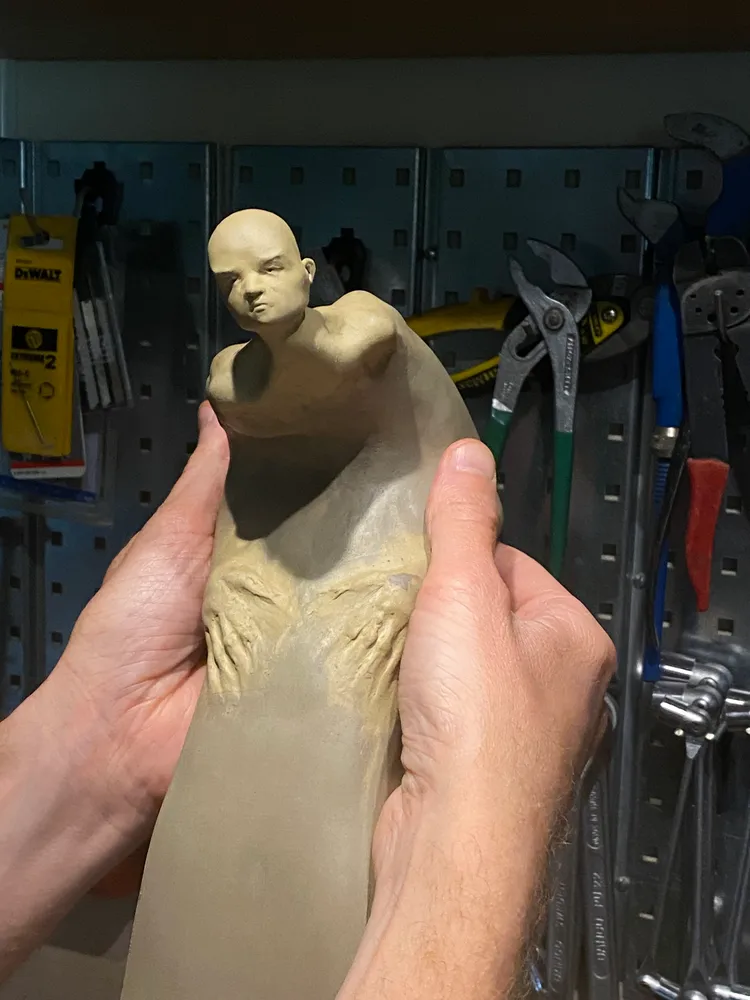
There's a point in almost every sculpture where it would be easy to make it neater. The clay is cooperative, the tools are sharp, and it takes very little effort to true up an edge, even out a surface, or straighten a line that came out slightly off. I've learned to be suspicious of that moment.
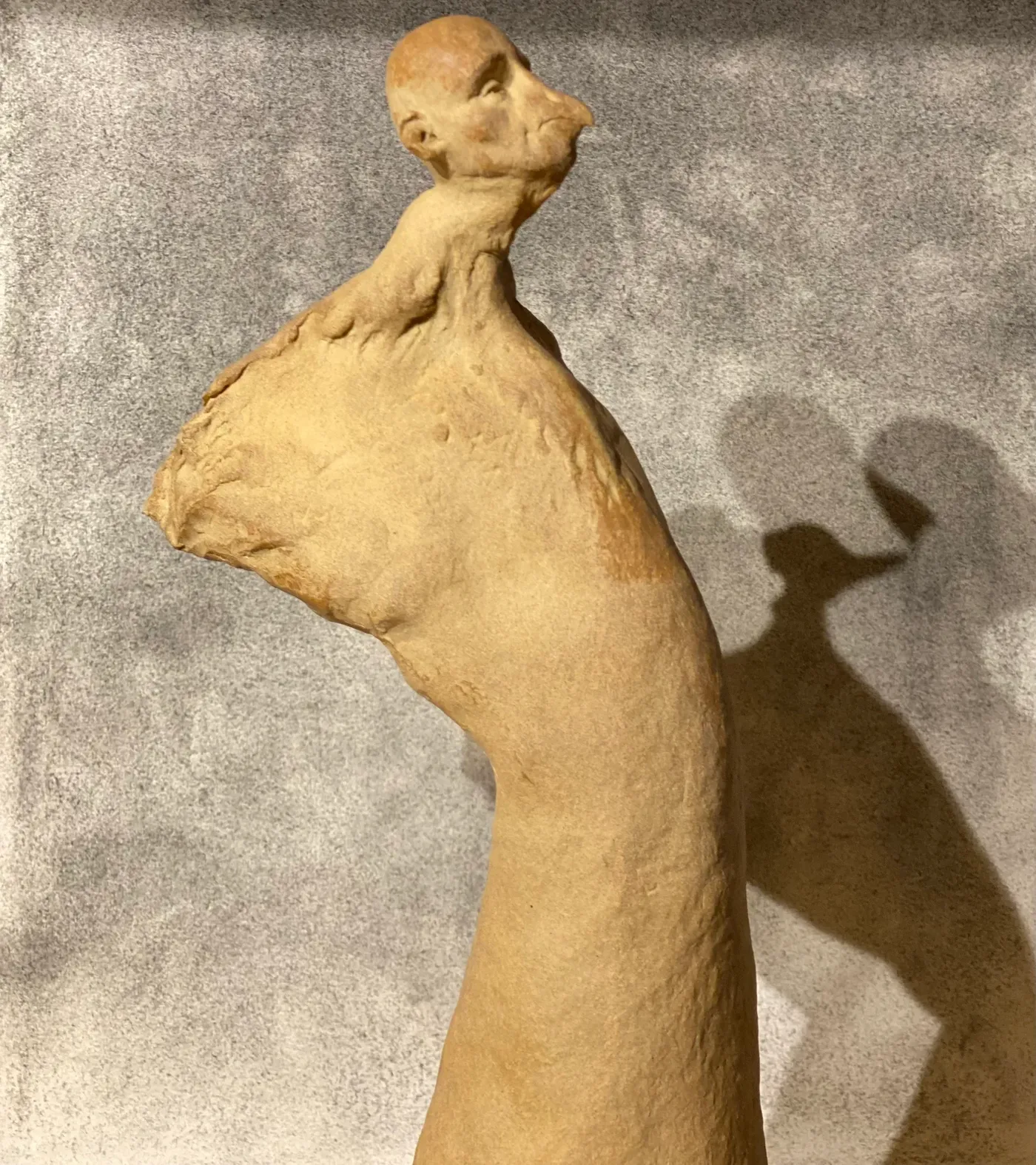
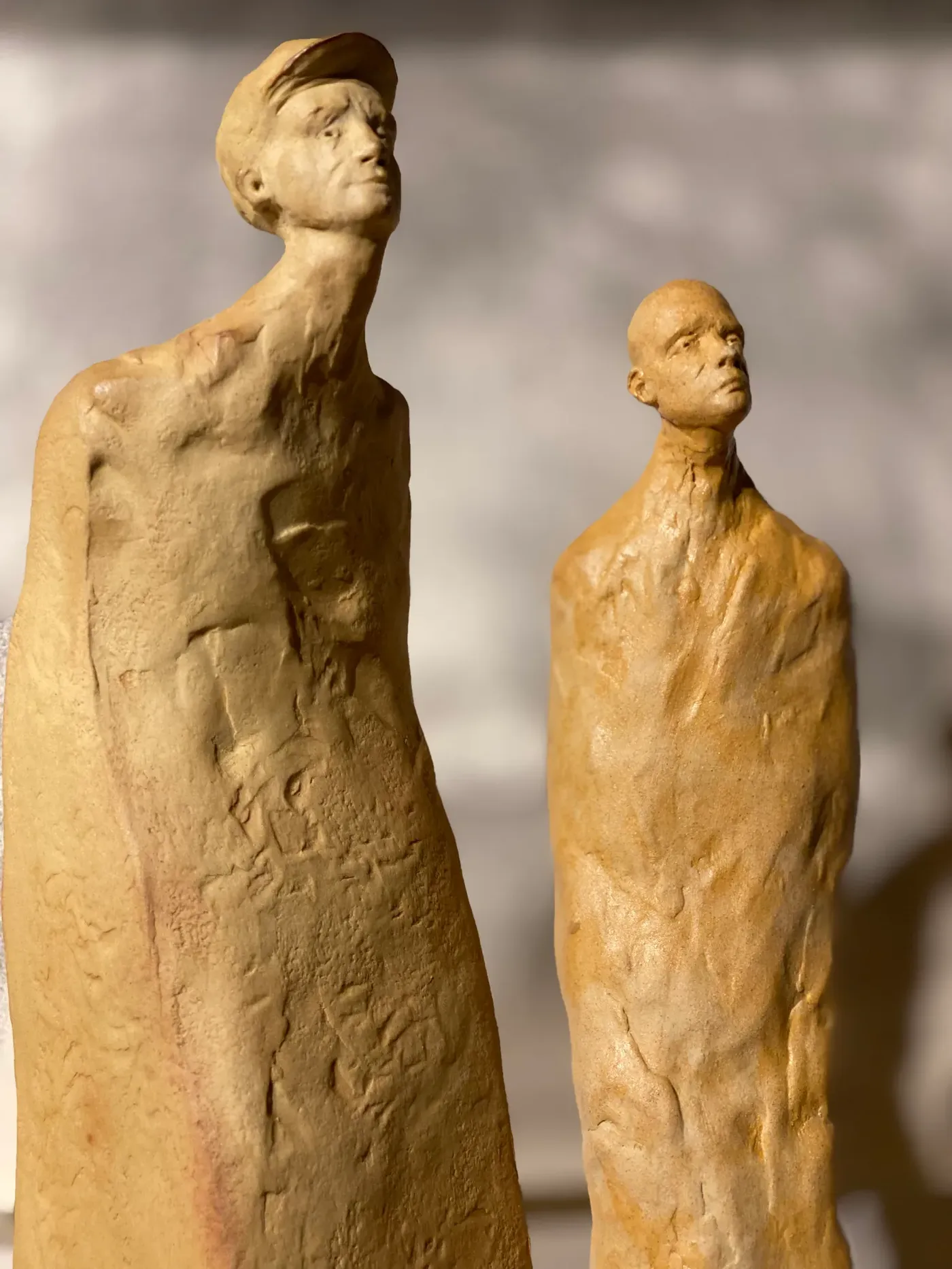
Most of what reads as "imperfection" in a finished piece isn't a failure of technique — it's a record of a decision, made at a particular moment, with the clay in a particular state. A shoulder that sits a little asymmetrically because that's how the coils stacked that day. A texture that's rougher on one side because my hand was moving faster there. These aren't things I'm failing to fix. They're the parts of the process that are still visible once the process is over.
I think about this most with faces, where the temptation toward symmetry is strongest. A face built too evenly starts to feel general — a type, rather than a specific presence. The slight unevenness is often what gives it a character that feels like it belongs to one particular sculpture and not to sculpture in general.
Firing adds its own layer of unevenness on top of whatever I've left in the clay. Oxides pool differently depending on how the piece sat in the kiln. Engobes can shift a shade lighter or darker than expected. I've stopped trying to fully predict this, and mostly try to leave the piece in a state where those shifts will feel like they belong rather than like an accident layered on top.
None of this is an argument against skill or care — if anything it takes more attention to leave the right things unresolved than to smooth everything toward a safe average. But the goal isn't a flawless surface. It's a surface that still shows the hands that made it, unevenness included.